
Protecting the Gallatin River from Unnecessary Development
Cottonwood has been working to protect the Gallatin River from water pollution since 2020. Cottonwood has filed Clean Water Act lawsuits against the Big Sky Water & Sewer District and private resorts in Big Sky for causing the algae blooms below.
In 2020, Montana Department of Environmental Quality issued an Environmental Assessment stating the treated sewage being produced by the Big Sky wastewater plant poses a risk to the surface water quality of the Gallatin River and its tributaries. Despite the warning, the DEQ did not take action to stop the treated sewage from reaching surface waters.
In 2021, Cottonwood placed a tracer dye in the Big Sky Water & Sewer District’s treated sewage ponds. The dye was found in the West Fork of the Gallatin River 26 hours later.
The Big Sky Water & Sewer District told a jury the treated sewage ponds only leaked 270,000 gallons in 2020. After the trial, Cottonwood’s experts reviewed the spreadsheet given to the jury. The U.S. EPA then investigated and determined the treated sewage ponds leaked 7.2 million gallons, not 270,000 gallons as Big Sky told the jury. Cottonwood is now in the Ninth Circuit asking for a new trial.
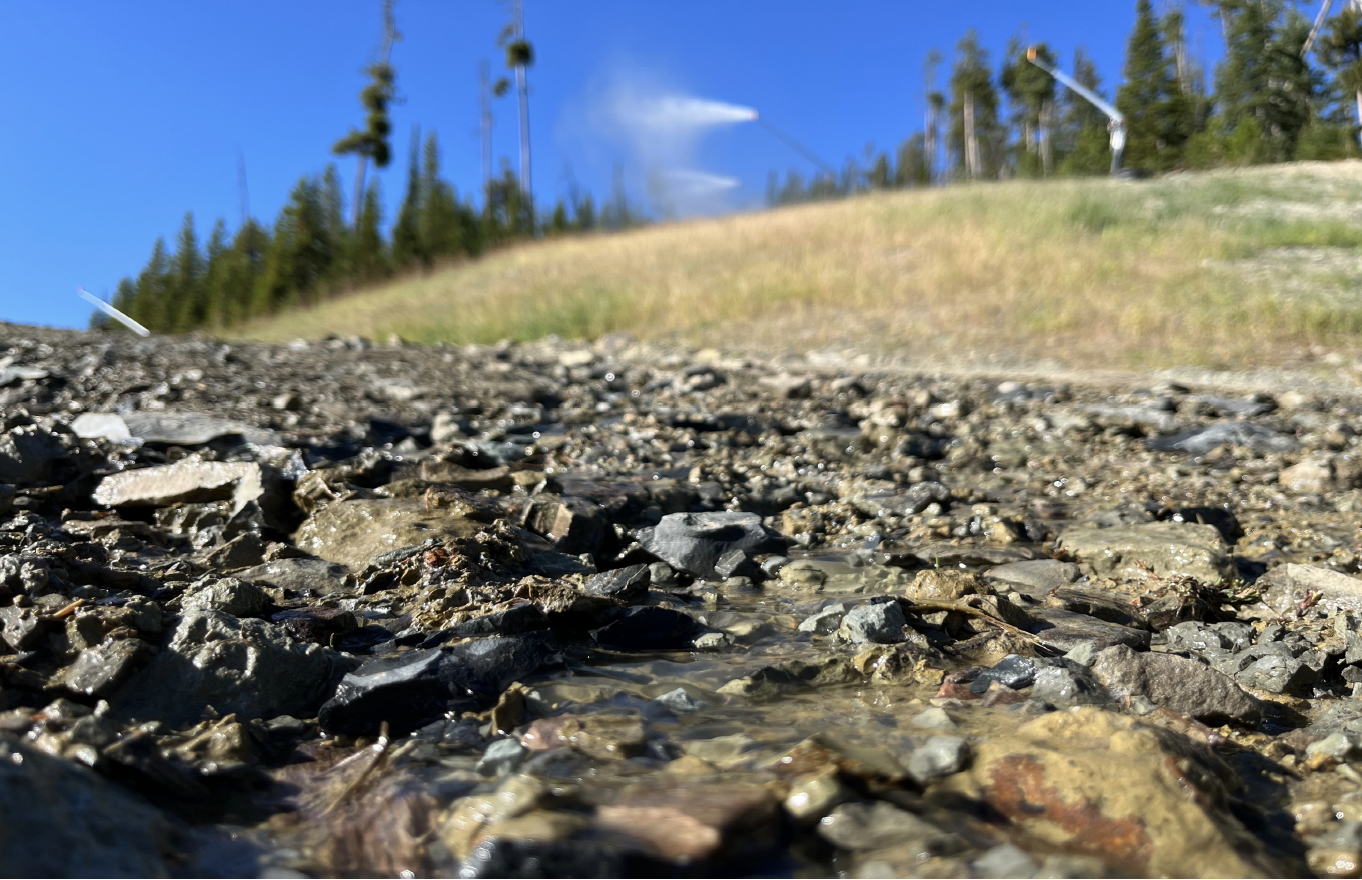
The photo above shows Spanish Peaks Mountain Resort over-irrigating a hillside slope. The treated sewage can be seen running down the middle of the road in the resort because of the over-irrigation. In 2022, Cottonwood settled a Clean Water Act lawsuit with Spanish Peaks that required the private resort to replace a treated sewage pond liner that was torn. The consent decree also limits the volume of treated sewage Spanish Peaks can use to irrigate its golf course to 33.6 million gallons/year.

In 2023, two Cottonwood employees walked below the high water mark in the South Fork of the Gallatin River into the heart of the Yellowstone Club. Water samples were collected from Yellowstone Club property that show a tributary that starts on golf course is polluting the river. When the Cottonwood employees got back to their cars at the trailhead, a Gallatin County Sheriff questioned them. The State of Montana later prosecuted Cottonwood E.D. John Meyer for criminal trespass. The Madison County Municipal Court dismissed the trespassing charges with prejudice. Cottonwood then used the samples to anchor a Clean Water Act lawsuit against the Yellowstone Club.
After months of back and forth, the federal court issued an order that allowed Cottonwood to place tracer dye in the Yellowstone Club’s treated sewage pond. If the golf course was spraying treated sewage into the golf course’s tributaries, Cottonwood would find the dye in water samples. The dye is visible for nine days. Yellowstone Club obstructed the test by not irrigating for for fifteen days in August when it didn’t rain.
In addition to placing a tracer dye in the YC’s treated sewage pond, Cottonwood staff spent approximately eighty hours inside the Yellowstone Club during the summer of 2024 with a small team of professors, researchers, and other experts. The team took water and algae samples from streams, water hazards, and ponds. Two professors from Montana State University and University of Maryland testified it is more likely than not that the algae in the Gallatin River and its tributaries contains the Yellowstone Club’s treated sewage.
Cottonwood retained research professors from Montana State University and other universities from across the United States to work on this lawsuit.
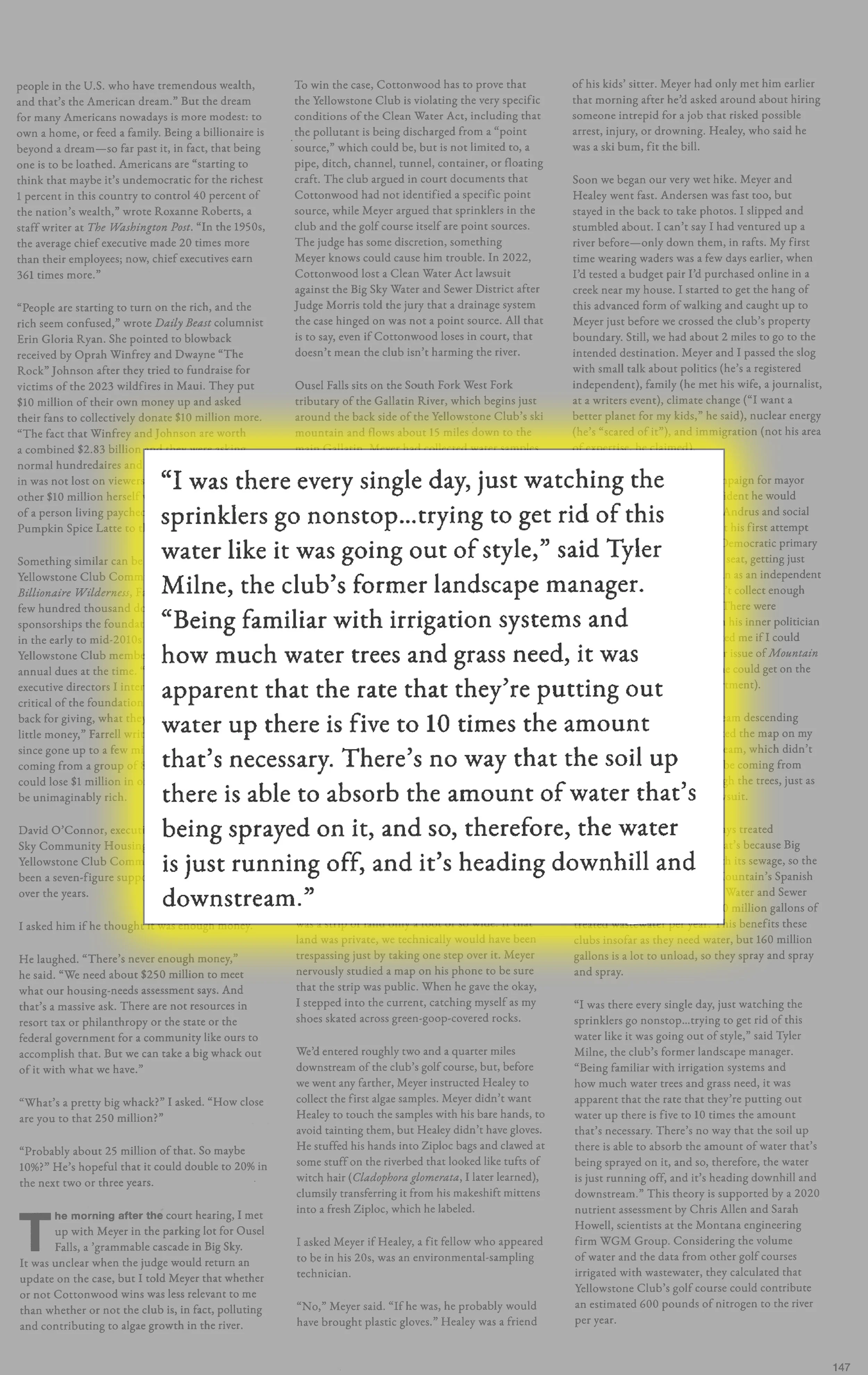
A former employee of the Yellowstone Club provided the quote above for this article in the Mountain Gazette.
Q: Why would the Yellowstone Club knowingly dispose of its treated sewage into the South Fork/West Fork of the Gallatin River without a permit?
The Yellowstone Club and another private resort (Spanish Peaks) entered into an agreement with the Big Sky Water & Sewer District that allows them to hook up new sewers for multi-million dollar vacation houses and hotels in exchange for disposing of up to 160 million gallons of treated sewage per year.
Q: Why don’t the polluters in Big Sky just obtain Clean Water Act permits?
No more pollution permits can be issued. The Big Sky Water & Sewer District, Spanish Peaks, Big Sky Resort, and Yellowstone Club cannot apply for permits because the Montana Department of Environmental Quality has placed the West Fork and main stem of the Gallatin River on its list of water-quality impaired streams. The Montana DEQ previously placed a moratorium on building in Big Sky. Instead of taking similar action, the DEQ is now looking the other way.